I. The Hazards of Calves' Diarrhea
Diarrhea is a common disease that poses a threat to the health of calves. The causes of diarrhea are complex and diverse. It can lead to a decline in the immunity of calves, trigger infections of other diseases, and even cause death. At the same time, it affects the growth and development of calves, resulting in stunted growth and causing significant economic losses to the dairy farm.
II. Causes of Diarrhea in Calves
The causes of diarrhea are numerous and can generally be classified into two types: one is caused by poor management, and the other is caused by pathogens.
1. Management factors
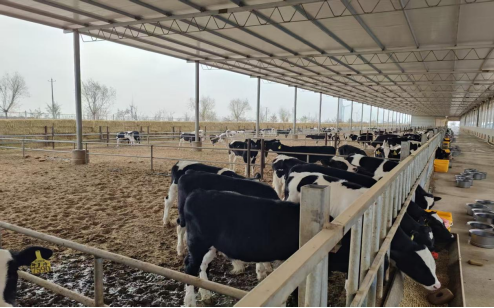
(1) Passive immunity failure: The level of maternal antibodies obtained from the mother through colostrum is low, resulting in passive immunity failure. Common reasons include: poor quality of colostrum, low immunoglobulin levels, contamination of colostrum, failure to pasteurize, late feeding of colostrum, and failure to follow the principles of regular feeding, timed feeding, quantitative feeding, and individualized feeding, or sudden changes in feed, or unguaranteed feed quality, etc. (2) Inappropriate feeding: Irregular feeding, failure to follow the principles of regular, timed, quantitative, and individualized feeding, or sudden changes in feed, or unguaranteed feed quality, etc. (3) Environmental factors: sudden changes in weather, poor hygiene conditions in calf pens, lack of bedding in calf pens, poor air circulation, excessive stocking density, etc.
2. Pathogenic Microbial Factors
(1) Bacterial Factors: A. Escherichia coli; the main clinical symptoms are dehydration and extreme weakness, and the animals die within one to several days after the onset of the disease. Escherichia coli is commonly found in calves aged 3 to 5 days. B. Neonatal Hemorrhagic Enteritis Caused by Clostridium perfringens; its clinical manifestations include acute onset, depression, weakness, bloody diarrhea, abdominal pain, and death. This disease is more common in strong and well-fed calves. C. Salmonella Disease; Salmonella disease is caused by various serotypes of intestinal Salmonella, and the main clinical symptoms are systemic sepsis and enteritis. This disease is often caused by some stress factors, such as feed changes, transportation, thirst, crowding, calving and surgery, etc.
(2) Parasitic Factors: A. Cryptosporidiosis; Cryptosporidiosis mainly occurs in newborn calves, and is often co-infected with other pathogens such as Escherichia coli, rotavirus, and coronavirus, causing severe intestinal damage and diarrhea. Calves with low immune function are more likely to suffer from this disease. Cryptosporidium infection is common in calves aged 5 to 15 days. B. Coccidiosis; Coccidia usually invade acutely, and like Cryptosporidium, coccidiosis is also a fecal-oral transmitted disease, often occurring in weaned calves or calves 1-2 weeks after mixed feeding. Coccidiosis is most likely to occur under conditions of poor nutrition, poor hygiene, overcrowding, long-distance transportation, sudden change of feed, or extreme adverse weather. When susceptible herds ingest spore-forming oocysts, coccidia will invade the epithelial cells of the intestinal mucosa, and the typical symptoms are black or dark asphalt-like loose stools, or a small amount of blood.
(3) Viral Factors: Infectious Diarrhea-Mucosal Disease (BVD), Coronavirus, Rotavirus, Parvovirus, etc. BVD usually causes severe diarrhea in calves. Diarrhea caused by Rotavirus and Coronavirus is more common in calves aged 5 to 15 days, and only shows mild depression, often able to continue suckling and drinking.
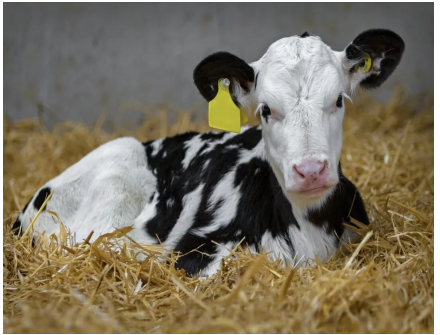
III. Evaluation of the Severity of Diarrhea in Calves
The feces of calves with severe diarrhea have an increased water content, a larger volume, and the skin of the calves becomes wrinkled. The appetite decreases, the spirit becomes lethargic, the gaze becomes dull, they refuse to stand, and they lie down and do not get up. Therefore, we use fecal scoring and dehydration severity scoring to assess the severity of diarrhea.
1. Fecal Scoring
Fecal scoring uses a 1-5 point system.
The scoring is as follows: 1 = constipation; 2 = formed hard feces; 3 = formed pasty feces; 4 = loose feces; 5 = watery feces.
2. Dehydration Severity Scoring
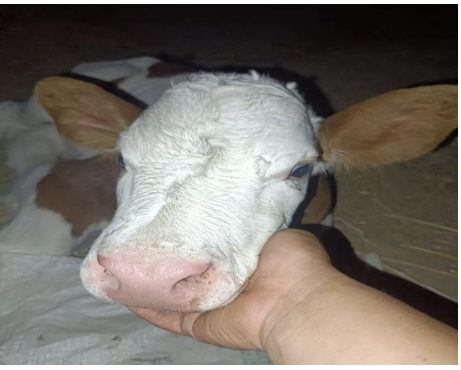
When calves have diarrhea, a large amount of water and electrolytes are lost, causing metabolic acidosis, and in severe cases, death. Therefore, evaluating the degree of dehydration is very important for assessing the condition. The degree of dehydration can be determined by observing the depth of the eye sockets and the skin recovery test. The scoring criteria are 1-4 points.
Observation of eye socket depth: Fix the calf's head and use the thumb to separate the eyelids. Under normal circumstances, the eye is exactly touching the eyelid, and there is no gap or distance between the eye and the eyelid. During dehydration, the eye socket sinks, and there is a gap between the eye and the eyelid. Generally, the more severe the eye socket depression, the more severe the dehydration.
3. Skin recovery test: Pinch the skin on the neck with your hand, twist it 90 degrees, and then release. Under normal circumstances, the skin can quickly return to its original position. During dehydration, the recovery speed is slower. The speed of recovery can be used to measure the severity of dehydration.
IV. Treatment of Calves' Diarrhea
The treatment for calves' diarrhea includes fluid replacement, energy supplementation, electrolyte supplementation, feed replacement, antibacterial treatment, strengthening immunity, and the use of anti-diarrheal drugs and adsorbents.
1. The most important measures are fluid and electrolyte supplementation. If the calves can stand and suckle independently, oral supplementation of electrolytes can be used. Sodium, glucose, amino acids, potassium, bicarbonate, etc. should also be supplemented simultaneously. The key to fluid replacement lies in the dosage, ensuring that the affected animals recover from dehydration.
2. The ideal method for correcting fluid loss and acidosis is to administer sodium bicarbonate solution.
3. Although antibiotics are ineffective against viruses and parasites, they can effectively kill Escherichia coli and Salmonella.
4. Cryptosporidiosis can be prevented and treated with cinchonine, and coccidiosis can be prevented and treated with ampicillin, sulfanilamide, and gatifloxacin. Coccidia cause significant damage to calves, so active prevention and control are necessary to help the calves develop an appropriate immunity against coccidia on their own.
5. The application of intestinal gel agents and adsorbents is also widespread, but they only increase the viscosity of feces and cannot reduce dehydration and acidosis.
6. Non-steroidal anti-inflammatory drugs can inhibit prostaglandin activity and have an effect on some types of diarrhea. They are particularly important for the treatment of sepsis and endotoxemia. At the same time, they can relieve pain and reduce fever, improving the comfort of the affected calves.
V. Prevention Measures for Calves' Diarrhea
1. The adult cows should be immunized against infectious diarrhea-mucosal disease (BVD) coronaviruses, rotaviruses, parvoviruses, etc. in the late gestation period.
2. Immediately separate the calves from the new-born adult cows after delivery to prevent the mother's disease from infecting the calves.
3. Administer colostrum within 1 hour after delivery. Take blood samples from calves aged 3-5 days old and measure the serum total protein level using a refractometer.
4. Ensure good ventilation in the calf pen (island), dry and comfortable bedding, and a clean environment. Feed regular milk at fixed times, temperatures, quantities, and by specific personnel. Give a small amount of starter feed to calves around 3-5 days after birth to help them gradually adapt to free access to the starter feed and transition to the growth feed.
5. Strengthen the feeding and management of dairy cows during the pre-pregnancy period, as this is the period when the calves grow the fastest in the mother's body and the prerequisite for the dairy cows to secrete high-quality colostrum after giving birth.
6. Try to reduce the stocking density. Single-stall feeding for suckling calves.
7. Prevent feces from contaminating feed and water, and minimize the impact of various stressors.
8. Early detection, immediate isolation, and early treatment.